In York, the glacial and post-glacial deposits of the Vale of York create a layered subsurface that demands careful hydrogeological characterisation. We frequently encounter sequences of laminated clays overlying sands and gravels of the Sherwood Sandstone aquifer, where perched water tables can surprise even experienced contractors. A desk study alone cannot reveal how water actually moves through these heterogeneous glacial tills. The field permeability test, conducted in-situ via Lefranc or Lugeon procedures, measures the mass hydraulic conductivity of the soil or rock mass directly, capturing the influence of fissures, lenses, and fabric that laboratory tests on small specimens inevitably miss. For engineers designing deep basements near the River Ouse or planning dewatering for infrastructure within York's historic city walls, this data is not optional—it is fundamental. The test quantifies flow rates under controlled hydraulic gradients, providing the design parameters needed for realistic seepage analysis and groundwater control during deep excavations in urban environments.
One Lugeon test in fractured Sherwood Sandstone can reveal more about bulk rock mass permeability than a dozen laboratory permeameter tests on intact core samples.
Process and scope
Local ground factors
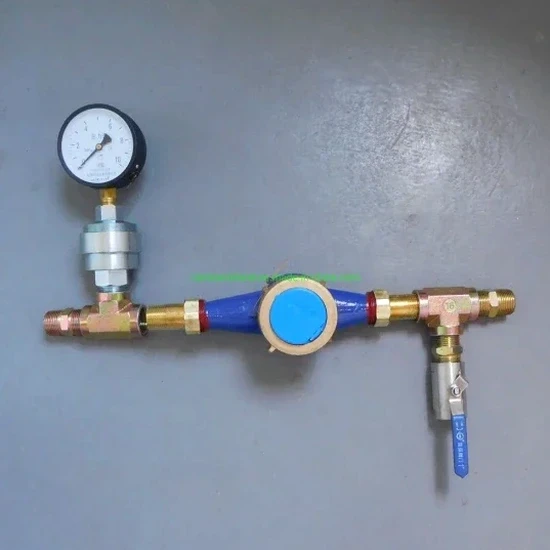
The equipment itself is deceptively simple: a graduated water reservoir, a pressure gauge, a flow meter, and a set of inflatable packers connected to a nitrogen bottle. On a drizzly morning at a site off Hull Road, the setup takes about forty minutes once the borehole has been flushed clean. The real risk lies not in the hardware but in interpretation. If the borehole sidewalls are smeared with clay during drilling, the test will underestimate permeability; if the packer leaks at depth, the injected water short-circuits to the surface. Our technicians always perform a packer seating check before each stage and log the injection pressure in small increments. In the boulder clay that mantles much of York's northern suburbs, we also watch for hydraulic fracturing at pressures above the overburden stress, a subtle failure mode that can produce artificially high Lugeon values and lead to an unsafe dewatering design.
Video overview
Relevant standards
BS 5930:2015+A1:2020 — Code of practice for ground investigations, BS EN ISO 22282-2:2012 — Geotechnical investigation and testing. Geohydraulic testing. Water permeability tests in a borehole using open systems, BS EN ISO 22282-3:2012 — Water pressure tests in rock, Eurocode 7 — BS EN 1997-2:2007, Ground investigation and testing
Other technical services
Lefranc Permeability Testing in Soils
Variable-head and constant-head Lefranc tests performed at discrete depths within boreholes through York's glacial tills and fluvial sands. Each test isolates a specific stratum using inflatable packers, yielding a direct measurement of hydraulic conductivity (k) for use in seepage analyses, excavation dewatering design, and landfill liner assessments.
Lugeon Water Pressure Testing in Rock
Five-stage pressure testing in the Sherwood Sandstone and underlying Permian formations following the Houlsby interpretation method. We measure the water take in Lugeon units (litres per metre per minute at 10 bar), characterising fracture flow regimes essential for tunnel alignment beneath York's historic centre and for assessing grout take in dam foundations.
Typical parameters
Quick answers
What does a Lefranc or Lugeon test cost in York?
For a typical single Lefranc test in soil or a Lugeon test in rock at one depth interval within a borehole, the cost in the York area generally ranges from £560 to £840. This includes packer setup, the test run at multiple pressure stages, and the interpretive report with permeability calculations. Mobilisation and the borehole drilling itself are priced separately, as is any extended multi-depth programme.
When should I choose a Lefranc test over a laboratory permeability test?
Choose the Lefranc test when the soil fabric—fissures in glacial till, sand lenses, root holes—controls the permeability, because these features are destroyed during sampling. The in-situ test measures bulk mass permeability at the scale of the engineering problem. Laboratory tests on small specimens often underestimate field permeability by one or two orders of magnitude in York's heterogeneous drift deposits.
How deep can you perform Lugeon testing in the York area?
We routinely conduct Lugeon tests to depths of 60 metres in the Sherwood Sandstone aquifer beneath York, using wireline-deployed double-packer systems. The practical depth limit is governed by the borehole diameter and the available nitrogen pressure to inflate the packers against the hydrostatic head at depth, not by the test method itself.